
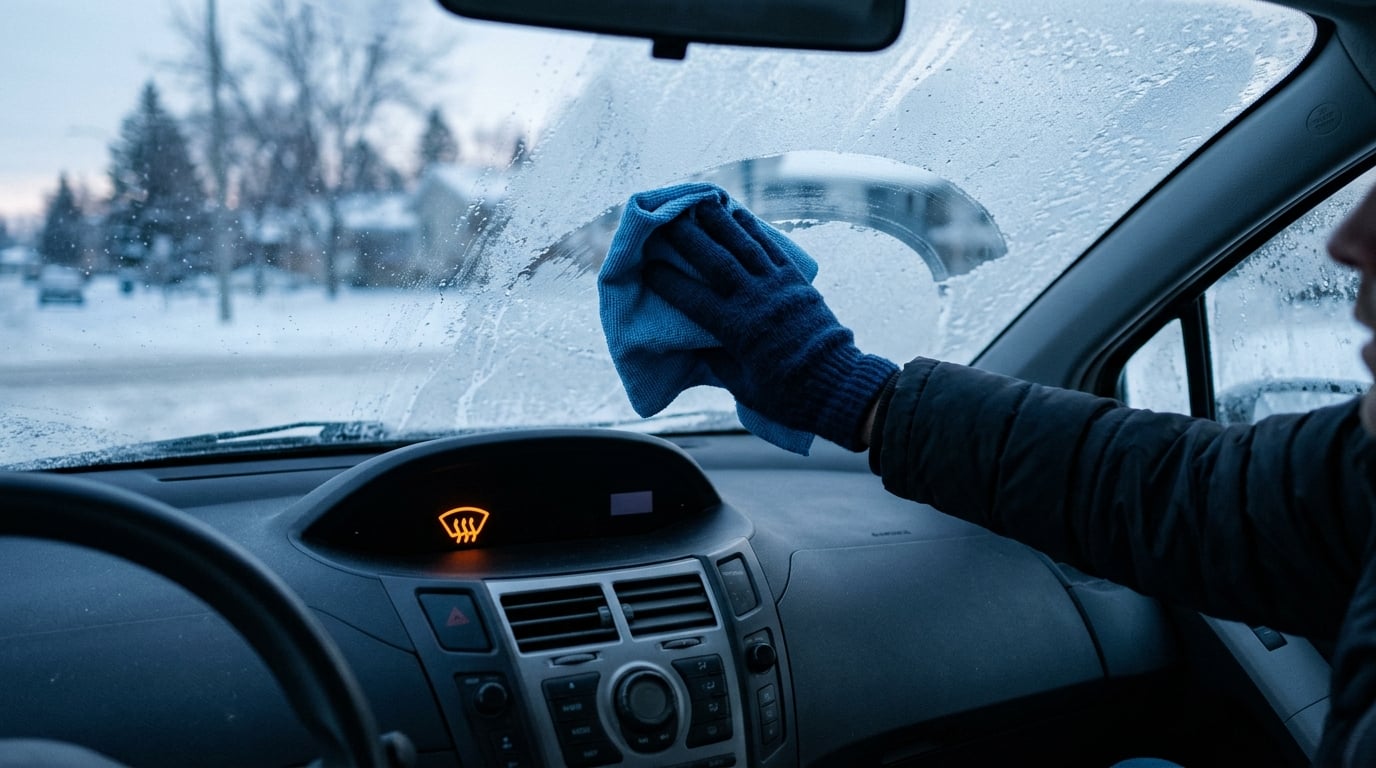
Learning how to stop windows fogging in winter comes down to three things: air directed at the glass, moisture pulled out of the cabin, and a demister that can actually move enough of both. Most drivers only ever touch the first one, which is why the same glass fogs up again on the next cold commute. The fixes below run from free and instant to a proper repair, so you can stop where your problem actually is.
Ten minutes of diagnosis will tell you which of these you need. If the glass clears with airflow and stays clear, you have a habit problem. If it stays fogged at full fan, something mechanical is wrong.
Table of Contents
- What You Need to Stop Windows Fogging in Winter
- Step-by-Step
- 1. Clear the Inside of the Windows First
- 2. Use the Front Defogger Correctly
- 3. Turn on the Air Conditioning for Faster Drying
- 4. Keep the Cabin Ventilation System Working
- 5. Check the Defroster Grilles and Cabin Air Filter
- 6. Diagnose a Weak Blower or Failed Demister
- 7. How to Stop Windows Fogging in Winter for Good
- Common Mistakes
- Frequently Asked Questions
- Why do my car windows fog up on the inside in winter?
- Does air conditioning really clear fogged windows in winter?
- How do I clear a fogged windshield before driving?
- Is the rear defogger enough to clear fogging?
- Are anti-fog sprays and shaving cream safe on car windows?
- When does window fogging mean a repair instead of bad weather?
- Conclusion
What You Need to Stop Windows Fogging in Winter
Almost nothing. The tools exist because you may need to look behind a dashboard panel, not because fogging is a complicated repair.
- Your vehicle’s HVAC and defogger controls, plus the owner’s manual to confirm which mode your demister uses.
- A clean microfiber cloth and a glass cleaner safe for interior glass.
- A flashlight for inspecting the defroster grilles at the base of the windshield.
- A soft brush or vacuum attachment for the cabin air filter housing.
- Optional: trim tools for reaching the blower, and a multimeter for checking a fuse or demister connector.
The owner’s manual matters more than people expect. Defroster layouts differ a lot between makes, and some vehicles route the demister air through a duct that only feeds the windshield when a specific vent is selected.
Step-by-Step
1. Clear the Inside of the Windows First
Start by wiping the interior glass down. A film of dust, wax or old anti-fog residue holds droplets together and makes light scatter, so a perfectly clear pane can still look milky.
Use a microfiber cloth with a cleaner made for interior glass. Avoid ammonia-based products on tinted windows, aftermarket screens or anything with a film, and never use household glass cleaner on a display.
Check the result by looking at a reflection in the glass. If the reflection is sharp, the surface is clean and any remaining haze is condensation, not dirt.
2. Use the Front Defogger Correctly
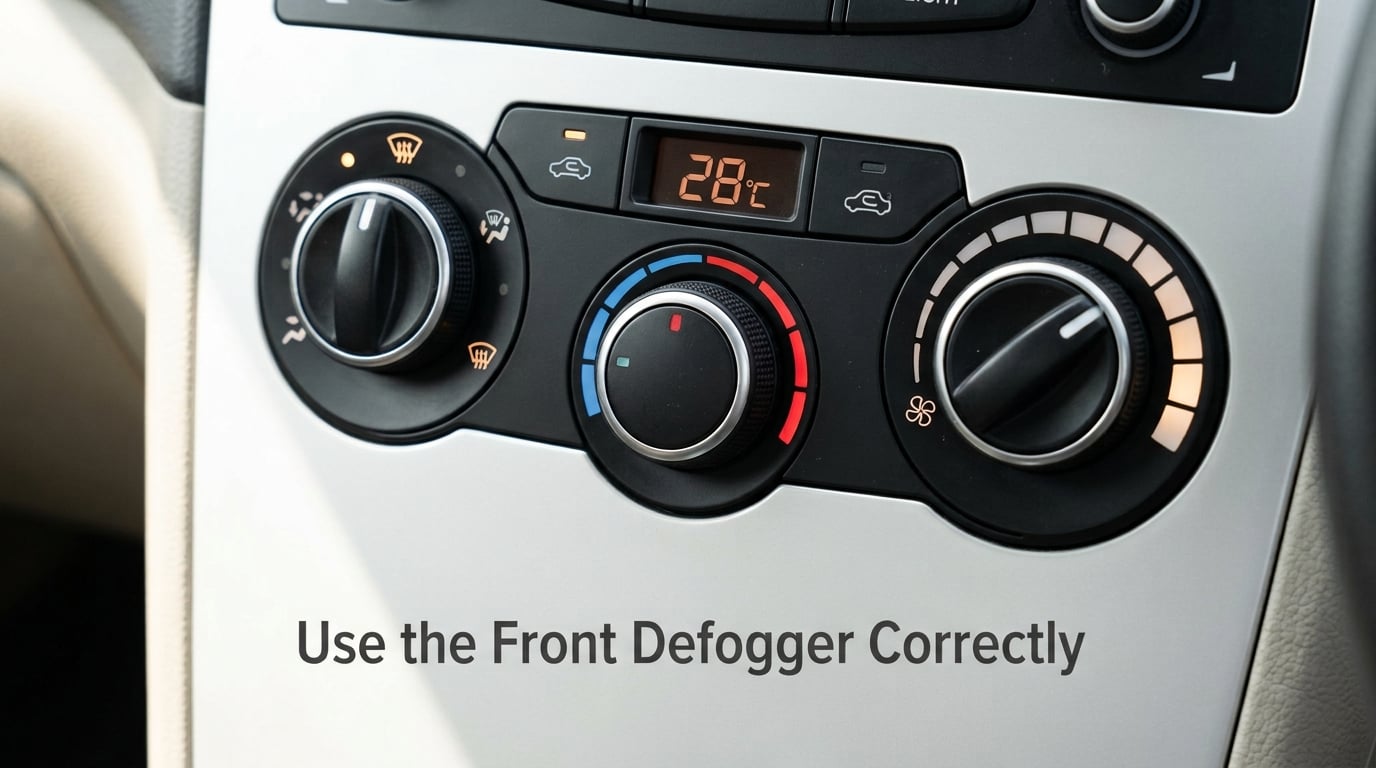
Select the windshield defogger icon, set the temperature toward warm, set the airflow toward the windshield, and turn the fan to a high or medium setting. That is the whole sequence, and most people get it wrong by leaving airflow on the dashboard or face vents.
The front and rear controls do different jobs. The front demister blows heated air across the inside of the windshield, which is the only way to clear the driver’s view. The rear defogger runs current through a heating grid in the back glass, so it clears the rear window and nothing else.
You should see improvement within a minute or two at high fan. No change at all in that window points at airflow, not temperature, so move to step 6.
3. Turn on the Air Conditioning for Faster Drying
Yes, switch the air conditioning on even in winter. Its job in this situation is to pull water out of the air, and warm air alone only holds more moisture than it did before.
The combination that works best is the air conditioning on, the temperature a little below your normal warm setting, and the fan high with the airflow aimed at the windshield. The air conditioning cools the air just enough to remove moisture, and the heater brings the air back to a comfortable drying temperature.
Drivers who skip the air conditioning usually wait three times as long for the same result. It runs a small compressor load, so it is not the expensive part of the trip.
4. Keep the Cabin Ventilation System Working
Use fresh air, not recirculate, when the glass is fogging from moisture built up inside the cabin. Recirculate repeatedly rewarms damp air and keeps sending it back at the windshield, which makes the fog worse rather than better.
Recirculation makes sense in traffic, on a dusty road or inside a garage, where you do not want exhaust fumes pulled in. The moment the windshield starts fogging, switch back to fresh air.
If your car has a sunroof, cracking it open for a few minutes moves a lot of humid air out quickly. On a dry day the same effect comes from opening a window slightly for ten minutes morning and evening.
A common modern trigger is a weekend heating setback. The car sits cold and sealed all Saturday and Sunday, then warm, damp air hits cold glass on the Monday morning drive and the glass fogs within minutes.
5. Check the Defroster Grilles and Cabin Air Filter
Look at the defroster grilles along the base of the windshield with a flashlight. If the fins are bent, clogged with leaves or vacuum dust, or hidden behind a sunshade, the demister cannot push enough air to clear the glass.
The cabin air filter sits behind a panel in the glovebox or under the bonnet on many vehicles. If it is grey, matted or torn, air is bypassing it and carrying grit straight onto the windshield. Check the replacement interval in the owner’s manual rather than guessing.
Also look for a trickle-style vent blocked by closed blinds. Those vents feed background air into the cabin, and a blind held against one all winter quietly undoes a lot of the ventilation you thought you had.
If airflow improves noticeably after clearing a grille or fitting a clean filter, you have found the cause. If it feels identical, keep going.
6. Diagnose a Weak Blower or Failed Demister
Listen for the symptoms rather than guessing. No airflow at any fan speed, a rattling or grinding blower, air that only reaches the side vents, or a demister that runs for a few minutes then cuts out all point to electrical faults rather than weather.
Check the fuse box for the blower and demister circuits. A demister grid that draws badly, a blower motor that has seized, or a connector that has worked loose will all take the defogger offline, and a blown fuse is the cheapest thing to rule out.
A multimeter tells you whether the demister grid has continuity across it. No continuity means the grid is broken, which is a glass replacement rather than a repair. Continuity with a heavy draw means look at the relay, the fuse and the wiring loom.
Leave anything behind the dashboard to a qualified technician. Airbag wiring runs close to the HVAC box on many vehicles, and trimmed trim panels are a bad trade for clear glass.
7. How to Stop Windows Fogging in Winter for Good
Once the immediate fogging is handled, the recurring version of this problem is a habit problem. Five things keep it away for good.
- Keep the cabin dry. Run the exhaust fan or open a window while showering, cooking or drying clothes indoors.
- Clear the interior glass before the cold mornings, not after the fog has already formed.
- Run the front defogger with fresh air, moderate heat and the air conditioning on as a set routine.
- Change the cabin air filter on the interval in the manual, and clear the defroster grilles each autumn.
- Fix airflow faults rather than living with them. A demister that only works sometimes never works when you need it.
None of that needs a workshop visit. What it does need is doing at the same point every winter, usually when the first real cold morning arrives.
Common Mistakes
Almost every persistent case comes down to one of these habits.
Leaving recirculate on. The single most common mistake. It traps the moisture instead of clearing it. Switch to fresh air the moment the glass fogs.
Using only the rear defogger. The rear grid has no effect on the windshield. It is useful for mirrors and the back window, and it is not a substitute.
Aiming airflow at the wrong vents. Warm dashboard air fogs nothing. The demister only works when the airflow is directed up into the windshield.
Forgetting the air conditioning. Heat alone adds capacity to hold water. The air conditioning is what removes it.
Using harsh interior cleaners. Solvents and ammonia-based products haze interior glass permanently and can degrade rubber seals around the panes.
Driving with an unrepaired airflow or electrical fault. If the demister dies mid-journey you cannot defog at all, so treat a dead blower or a cut-out demister as a fault to fix rather than something to work around.
A couple of habits help beyond the seven steps. Park the car with the windows cracked for a minute before driving, which purges overnight moisture from the cabin. And keep a cloth in the door pocket, because the first wipe clears most of the film before anyone is waiting at a junction.
Frequently Asked Questions
Why do my car windows fog up on the inside in winter?
Warm cabin air holds a lot of water vapour. When it touches glass that has been chilled by outside air, it cools past its dew point and the excess moisture turns into droplets on the inside surface. Fogging is strongest early in the morning, after the car has been closed and warm for hours, and on clear cold nights when the glass drops fastest.
Does air conditioning really clear fogged windows in winter?
It does, and it is the part most drivers leave out. Air conditioning cools the air just enough to condense moisture out of it, and the heater brings that dried air back to a usable temperature. Set the air conditioning on, the fan high, the airflow at the windshield and the temperature slightly lower than usual, and the glass clears in a couple of minutes.
How do I clear a fogged windshield before driving?
Run the front demister on high with the air conditioning on and the temperature a little below warm. Wipe the inside glass with a clean microfiber cloth while it runs, and open a sunroof or window slightly to move humid air out. Never drive with the windshield still fogged, and keep fragrance sprays away from the glass.
Is the rear defogger enough to clear fogging?
No. The rear defogger is a heating grid built into the back window, so it clears the rear glass and sometimes the door mirrors. The windshield is cleared by air blown from the dashboard demister grilles. Both can be on at once, but only the front system touches the driver’s view of the road.
Are anti-fog sprays and shaving cream safe on car windows?
Anti-fog sprays work on interior glass for a while, then they need reapplying as residue builds up. Shaving cream gives a similar short-lived coating and leaves a greasy film that makes light scatter and is unpleasant to clean off. Neither addresses humidity or airflow. Use them if you like, but do them before a bad winter morning rather than relying on them.
When does window fogging mean a repair instead of bad weather?
It means a repair when the glass stays fogged at maximum demister fan with the air conditioning and fresh air running. One-sided fogging, air that reaches only the side vents, a blower that rattles, a demister that cuts out after a few minutes, or a persistent smell of dampness are all signs of a failed blower, a broken demister grid, a blocked duct or a sealing problem worth a technician’s look.
Conclusion
The first thing to do is simple: clear the inside of the glass, then run the front defogger on high with fresh air, moderate heat and the air conditioning switched on. That combination is the core of how to stop windows fogging in winter, and it clears most windows in a couple of minutes.
If fogging comes back every winter no matter what you do, the problem is not the weather. Fogging on one side only, air that never reaches the windshield, a blower that rattles, a demister that cuts out, or a damp smell that lingers all point to a ventilation, blower, demister, moisture or sealing fault. Get it looked at before the next cold morning, because a demister that fails halfway through a journey leaves you with no way to clear the glass at all.