
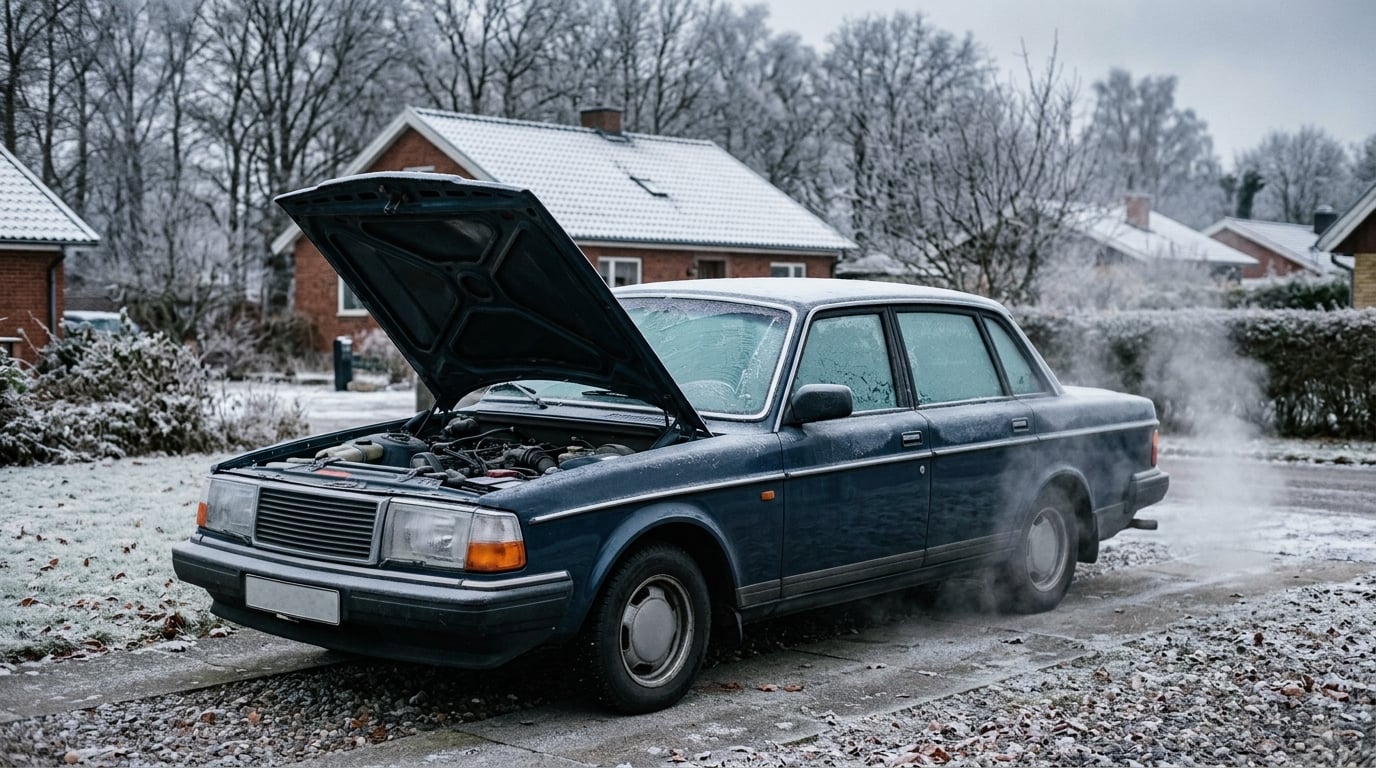
Short idling is fine, and does idling hurt your engine only when it goes on too long. A couple of minutes at a stoplight will not harm a healthy gasoline engine, but sitting parked with the engine running for 30 minutes or more, day after day, quietly shortens the life of your oil, your spark plugs, and your exhaust.
Before anything else, the safety point. A running engine produces carbon monoxide, a gas you cannot see or smell. Never run a vehicle in a closed or partly closed garage, even with the garage door up. If you are in a parking structure, an enclosed deck, or a long tunnel, shut the engine off when you stop and get out.
I work in a garage, and the question that comes up most is the same one people search: how many minutes matter. The honest answer is that there is no magic cliff. Risk climbs with duration, and it climbs faster in cold weather, on an older vehicle, or on a diesel. Here is where the line sits and what is actually happening underneath the hood while you wait.
Table of Contents
- Does Idling Hurt Your Engine? Short vs. Long Idling
- How Long Can You Safely Leave a Car Idling?
- What Happens Inside an Engine While It Idles?
- Common Signs Your Engine Is Being Damaged by Idling
- Why Long Idling Is Especially Bad in Cold Weather
- Fuel, Oil, and Battery Problems Linked to Excess Idling
- When Idling Is Necessary and When You Should Shut Off
- How to Reduce Idling Without Damaging Your Engine
- Frequently Asked Questions
- Is it bad to leave my car idling for a few minutes?
- How long can a gasoline engine idle without causing damage?
- Does idling dilute the oil in my engine?
- Why does my car idle roughly after being left on?
- Is extended idling especially harmful in cold weather?
- Should I let my car warm up by idling before driving?
- Conclusion: The First Thing to Do
Does Idling Hurt Your Engine? Short vs. Long Idling
Brief idling during warm-up or a traffic queue is normal, and no mechanic will worry about it. Prolonged idling is a different story. Five things tend to go wrong, and they all trace back to the same cause: a cold engine running at idle never reaches its designed operating temperature.
- Incomplete combustion. At idle the engine runs on a rich air and fuel mix. Some of that fuel burns, the rest washes past the spark plug and into the oil or out the tailpipe.
- Fuel dilution of the oil. Raw gasoline condensing into the crankcase thins the lubricating oil, so it does its job worse and breaks down sooner.
- Carbon buildup. The unburned residue collects on spark plug tips, intake valves, and combustion chamber surfaces, especially on direct injection engines that spray fuel straight at the valve.
- Slower oil warm-up. Cold oil is thick. Until it reaches operating temperature it carries more wear to the bearings and cylinder walls than warm oil does.
- Wasted fuel and emissions. An idling engine burns fuel roughly like a car doing 25 to 30 mph, just without moving you. Ten minutes of idling puts out close to a pound of carbon dioxide.
Duration matters, but so do the other conditions. A healthy modern fuel injected gasoline engine tolerates a lot more idling than a carbureted car from the 1970s. Altitude, humidity, fuel quality, and how recently the engine was serviced all shift the tolerance a little. Your owner’s manual is the tiebreaker, because the manufacturer who built the car knows how their idle control and emissions systems behave.
How Long Can You Safely Leave a Car Idling?
Here is how long you can safely leave a car idling, broken into the ranges people actually search for. The verdict column matters more than the exact minute mark.
| Idle time | What is happening | Verdict |
|---|---|---|
| Under 30 seconds | Fuel is burned less efficiently than driving, and the exhaust system warms up slower | No engine harm. This is the window most auto start-stop systems are designed to use. |
| 30 seconds to 5 minutes | Engine may reach partial operating temperature; traffic and warm-up are normal here | Fine. Roughly a mile of fuel is burned for every two minutes parked. |
| 5 to 20 minutes | Cool engine idling, condensation forming, plugs and valves collecting light residue | Still not damaging on a modern gasoline engine, but it is wasted fuel and it adds up quickly if you do it every day. |
| 20 to 60 minutes | Oil thinning from fuel dilution, water in the exhaust, visible exhaust smoke on a cold engine | This is where real wear starts, especially in cold weather or with short trips between stops. |
| 1 hour and beyond | Accelerated oil breakdown, carbon on valves and plugs, slow battery drain, higher exhaust temperatures | Harmful. Shut it off. A four hour idle is not a neutral act, it is hours of running on a partly rich mix. |
Does Idling Hurt Your Engine?
Only the long kind, and the threshold is nearer to 20 minutes than most people assume. Harmless idling means a warm-up, a red light, a slow driveway pull-away. Harmful idling means the engine is parked, still cold, burning fuel for heat you are not using. The gap between those two is usually a job, a parking lot, or a warm-up habit that outlived the car it started on.
Diesel engines are the honest exception. Because they compress air instead of using a spark, they make very little heat at low speed and genuinely benefit from a longer stationary warm-up, especially below freezing. Owners who run a diesel hard, tow with it, or idle it in extreme cold should follow the manufacturer warm-up guidance rather than a gas car rule of thumb. Gasoline engines are the reverse. Modern fuel injection has replaced the carburetor, so the long warm-up that old cars needed does nothing except waste fuel.
What Happens Inside an Engine While It Idles?
An idling engine is running at roughly 700 to 900 rpm with the throttle closed. That is a low load, so the engine control unit adds extra fuel to keep it from stumbling. The mix is richer than the one used at cruising speed, and a rich mix is the source of most idle related problems.
Because there is little airflow, some of that fuel does not fully burn. It ends up three ways. It washes down the cylinder walls and into the oil, where it thins the lubricant and can drop an engine’s oil life noticeably. It leaves as a thick, warm exhaust and haze from a cold exhaust system, which is the white vapor you see in the driveway on a cool morning. And it sticks to hot spark plug tips and intake valves as carbon, which is why plugs go soft and dull and why direct injection engines eventually need intake valve cleaning.
The other half of the problem is temperature. Engine oil, the coolant, and the catalytic converter all need heat to work as designed. An idling engine warms up slower than a gently driven one, and a car that only ever short hops never gets there. That matters for lubrication quality, for the oil change interval, and for how much water is condensing into the exhaust and the crankcase breather.
Common Signs Your Engine Is Being Damaged by Idling
A healthy engine that has only idled for a few minutes will not show you anything. These signs mean the pattern has been going on long enough to leave a mark, and several of them mean stop the engine now rather than finish your coffee.
- Rough, unsteady idle that persists after the engine is fully warm, or an idle that hunts up and down.
- Misfires, hesitation, or a check engine light that appears after long parked idling sessions on a cold engine.
- Thick, dark exhaust smoke or a strong fuel smell from the tailpipe, which points to unburned fuel leaving the engine.
- Oil on the dipstick that smells like gasoline, or oil that looks thin and glossy rather than dark and filmy. That is fuel dilution.
- Spongy, slow-cranking mornings, a battery warning, or headlights that dim noticeably when the engine is running.
- Rising idle RPM after a stop, or a check engine light for a misfire on a car that drives fine once it is moving.
- Overheating or a hot exhaust smell on a stationary car. Shut it off immediately and do not restart it in that condition.
Persistent rough idle, a fuel smell, or a dilution reading on the dipstick are inspection items, not things to keep driving around. A shop will check the spark plugs, read the fuel trims, and look at the oil before anything expensive happens.
Why Long Idling Is Especially Bad in Cold Weather
Cold weather is where idling does the most damage, and it is the season when people are most tempted to do it. A cold engine does not reach operating temperature faster, so a 30 minute idle in January is a much longer time at partial temperature than a 30 minute idle in July. Fuel washes the cylinder walls instead of burning, and the condensation that forms has nowhere to go.
That water is the quiet part. It collects in the exhaust where it can rust out a tailpipe or a flex pipe, and it can reach the engine oil through the crankcase ventilation system. A car that only ever idles to warm up, or only drives two minutes here and there, can end up with water and fuel in the oil.
The battery feels it too. Cold mornings mean the battery is already working hard, and the alternator has to cover everything else while it charges. Meanwhile the fuel burns less completely, so more of it leaves as water vapor out the pipe. If your car sits for weeks between drives, running it for a few minutes on the driveway does almost nothing for the battery and just adds moisture. A proper battery maintainer, or driving the car long enough to fully charge, is the better habit.
Fuel, Oil, and Battery Problems Linked to Excess Idling
Most idling damage in ordinary driving shows up as an oil interval problem, not an engine death. That is the part people miss, because the engine feels fine. What has actually happened is the lubricant got a repeated dose of raw fuel, ran at a lower temperature than designed, and quietly lost some of its life.
The practical response if you idle a lot for work, or you simply inherited the habit, is simple. Shorten your oil change interval to the low end of what your manual allows, keep up with the oil life monitor rather than the printed interval, and treat the service as a real fix rather than a formality. On a car driven mostly short trips, going in for spark plugs on the earlier side of the replacement window is cheap insurance.
Watch for the fuel dilution tell. Oil on the dipstick that smells like petrol, or an oil film that is thin and clear instead of dark, means the fuel is getting in. If you catch that early, an oil change fixes it. If you drive on it, you are running bearings on thin lubricant.
Start-stop systems are the best proof that restarting is safe. Manufacturers ship engines that shut down at every red light and restart hundreds of thousands of times, and those engines are warranted. The same logic says a second start after a long idle is not the thing that wears an engine out.
When Idling Is Necessary and When You Should Shut Off
The hardest part of this advice is that idling is often not optional. Delivery drivers, rideshare drivers, service technicians, and anyone working a fair or an event may run the engine because the job requires it, and often because the alternative is no cooling. The fix is a mitigation routine, not a lecture.
Traffic and short stops. Warm up by driving gently, not by idling. If the stop is under 30 seconds, leave it running. Past a minute or two, shut it off, especially on a modern car with start-stop.
Parked with the AC or heat running. This is the most common real-world question, and the answer is a clear shut it off. A stationary engine idling for 30 to 45 minutes with the compressor running is one of the least efficient things you can do to a car. If it is hot enough that you cannot leave the vehicle, the right move is a shaded parking spot with the engine off, a second car, or a break in an air conditioned space, not four hours of partial combustion.
Waiting for a passenger, a kid, or a delivery. If the engine was already warm when you stopped and the wait is a couple of minutes, the cold start cost is minimal. If the car is cold and the wait is long, park somewhere safe and shut it off.
Towing, roadside, and emergencies. Leave it running when you need the heater or defroster, and follow the tow operator’s instructions. Never idle in a closed garage, a tunnel, or an enclosed parking deck.
A car in storage. Running a stored car for 10 minutes a week does not keep it healthy and it will not charge a battery properly. Drive it long enough to get the oil and battery up to temperature and to fully charge the battery, or use a maintainer. Where local anti-idling rules apply, follow them. Do not fight them by idling outside.
How to Reduce Idling Without Damaging Your Engine
You do not need a new car or a gadget to fix this. A handful of habits cover almost all of it.
- Warm up by driving, not by idling. Pull away gently and let the engine reach operating temperature under light load. The tires, transmission, brakes, and steering all get to temperature the same way.
- Shut off at stops longer than a minute or two. If you have start-stop, use it. That is what it is there for.
- Do not rev a cold engine while parked. Blipping the throttle adds noise and fuel, not heat.
- Drive long enough to get hot. One 20 to 30 minute drive does more for oil, battery charge, and moisture than ten short hops.
- Stay on top of the basics. A clean air filter, correct oil, and fresh spark plugs all reduce how much damage a rough idle can do.
- If your job involves idling, shorten the oil interval and add fuel stabilizer for stored vehicles. This is the single most effective offset.
If a car is idling rough, throwing a misfire code, or showing a fuel smell, have it inspected before you keep doing it. A qualified mechanic can check the plugs, the fuel trims, and the oil in one visit, which is far cheaper than finding a diluted engine down the road.
Frequently Asked Questions
Is it bad to leave my car idling for a few minutes?
No. A few minutes of idling while the engine warms up or while you sit in traffic is normal and will not damage a healthy gasoline engine. Restarts are also safe, which is why modern cars ship with automatic start-stop that shuts the engine off at every light. A concern only starts around the 20 minute mark and becomes real past an hour, particularly in cold weather.
How long can a gasoline engine idle without causing damage?
Practically, 20 minutes of parked idling is where wear starts to matter, and an hour of idling is where it becomes clearly harmful. Up to about 20 minutes on a warm, modern, fuel injected engine, the cost is wasted fuel rather than damage. Beyond that, fuel dilution, carbon buildup, and battery strain accumulate. Follow your owner’s manual if it gives a specific limit.
Does idling dilute the oil in my engine?
Yes, that is the most common form of idling related damage in a car driven mostly short trips or long idles. A rich idle mix sends unburned fuel past the cylinder walls into the crankcase, where it thins the lubricating oil and shortens its service life. Check the dipstick for a thin, clear film that smells like gasoline, and shorten your oil change interval if you idle regularly.
Why does my car idle roughly after being left on?
Usually because the engine never got warm enough to burn its fuel completely. A long cold idle leaves carbon on the spark plug tips and can leave moisture in the intake and exhaust, both of which roughen the idle once you restart. If the roughness continues after a proper drive, or comes with a check engine light, have the plugs, fuel trims, and injectors checked.
Is extended idling especially harmful in cold weather?
Yes. A cold engine warms up slowly, so a 30 minute idle in winter is much longer at partial temperature than the same idle in summer. More fuel washes the cylinder walls, more condensation forms in the exhaust and the crankcase, and the battery is already working hard. Many engines that never reach operating temperature end up with fuel and water in the oil.
Should I let my car warm up by idling before driving?
Not on a modern gasoline engine. Fuel injection does not need a stationary warm-up, and idling actually warms the engine slower than driving gently. Diesel engines are the exception because they generate little heat at low speed, so many manufacturers call for a longer stationary warm-up. If your owner’s manual specifies a warm-up procedure, follow that over anything you have read online.
Conclusion: The First Thing to Do
So, does idling hurt your engine? A few minutes will not, and if you have been idling a few minutes, stop worrying about it. What hurts is parked idling past about 20 minutes, repeated day after day, especially in cold weather or on a car that never reaches operating temperature.
The first thing to do is simple: check your owner’s manual for the warm-up guidance and any idling limit your car was built with, then cut back on the long parked idles. If the oil keeps going in early, that habit is worth fixing before the oil keeps going in. And if the engine is already idling rough, smoking, or smelling like fuel, book an inspection rather than waiting for it to get worse.