
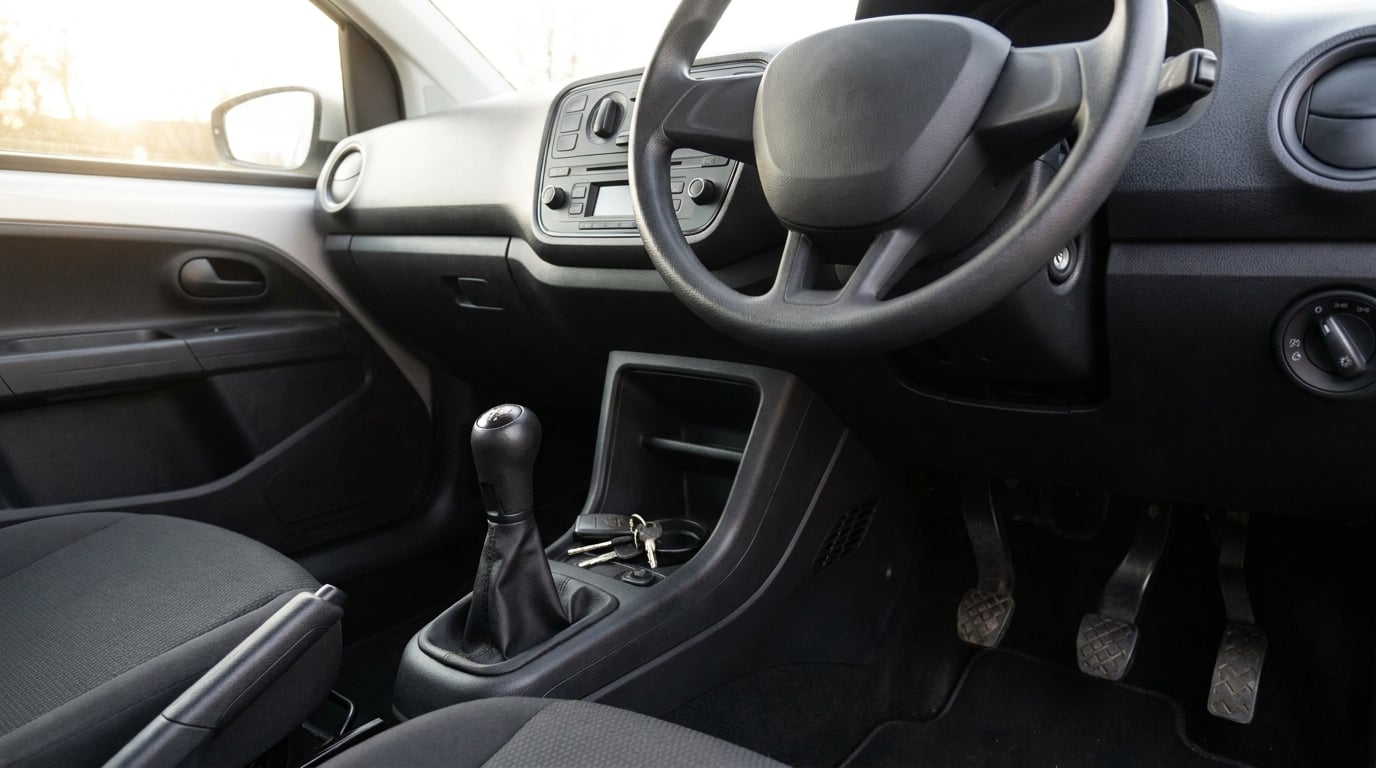
Driving a manual transmission smoothly comes down to two things: keeping engine speed matched to the speed of the car, and controlling clutch pressure right at the bite point where the drivetrain starts to pull. Get those two right and the engine never surges, the car never jerks, and you stop stalling at every junction.
It is a coordination skill rather than a strength one, and it takes most people between 20 and 30 hours of supervised practice before it feels automatic. I refreshed this guide for 2026 with the numbers that actually help, because most advice out there stops at “release it slowly” without telling you what slowly looks like.
One honest caveat first. A gear change physically interrupts engine torque, so a completely jolt-free change is not achievable by design. The goal is a change quiet enough that passengers in the back do not notice it happened.
Table of Contents
What You Need
You need a car with a manual gearbox that drives properly, thin-soled shoes, and a quiet place to practise for the first few sessions. Everything else is patience.
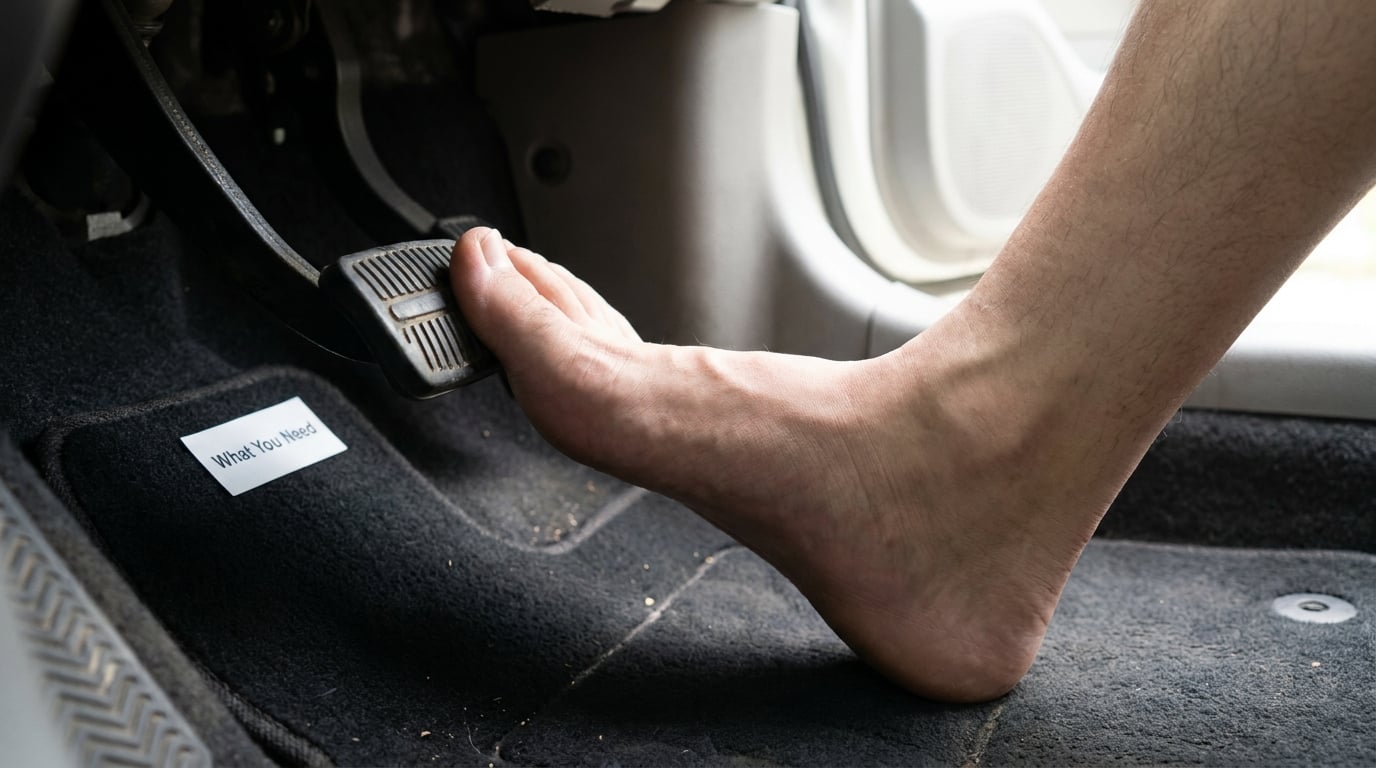
On footwear, wear thin-soled trainers or flat shoes with a firm heel. Slippers and thick boots make it almost impossible to feel the bite point, and a sandal-free foot is safer than guessing around a clutch pedal.
Choose a car with a working clutch, healthy brakes, and a gearbox that selects cleanly. If you are borrowing or renting an unfamiliar manual, read the owner’s manual for the gear pattern and clutch pedal adjustment first. Some cars sit much lower on the friction material than others, so the bite point you learned in one may be nowhere near the bite point in the next.
For the actual practice area, an empty car park or a quiet residential street on a dry day beats an open road. Free play on the clutch pedal, a firm bite point, and enough clearance around the car matter more than distance.
Before you start, confirm the brakes work properly. Stopping a manual car smoothly still requires good brakes, and if you are also maintaining the brakes on a car you rarely drive, that job comes first.
Step-by-Step: How to Drive a Manual Transmission Smoothly
The sequence below is progressive. Do not jump to step three until steps one and two are boring rather than stressful.
Step 1: Get Comfortable With the Controls
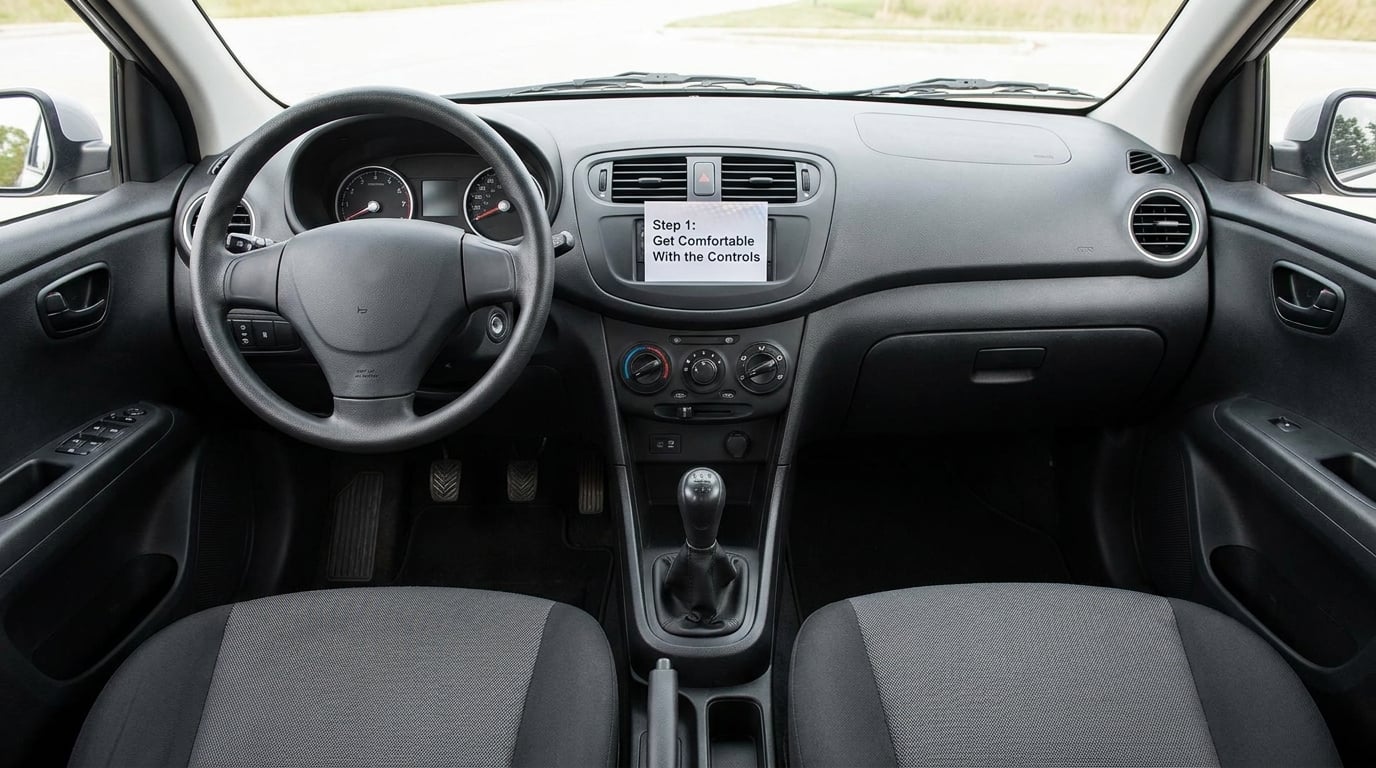
There are three pedals: clutch on the left, brake in the middle, accelerator on the right. Your left foot only ever touches the clutch, your right foot covers brake and accelerator, and your hands stay on the gear lever except when you need the handbrake.
Sit with the seat far enough back that you can fully depress the clutch without stretching, and check that the heel of your right foot rests on the floor while your toes reach the pedals. A cramped ankle is the reason a lot of learners stall.
With the ignition on or the engine running, gear lever in neutral and handbrake on, press the clutch all the way down. Now release it very slowly, letting your foot rise under its own weight.
At some point in that travel the engine note changes and the car feels like it wants to move, even though the handbrake is holding it. That is the bite point, also called the friction point. Success signal: the note dips slightly and you feel a small tug through the driveline.
Practice that in neutral ten times until your foot lands on it without hunting. If you have never found it, nothing else in this guide will work. Doing this with the engine off is gentler on the clutch than searching for it in first gear.
Step 2: Start From a Complete Stop
Left foot presses the clutch fully in, right foot presses the brake, and the lever goes into first. Add a little throttle, just enough to hear the engine come alive, then release the brake.
Hold that throttle steady and let the clutch come up slowly. As you pass through the bite point the car starts to move, and you keep feeding the clutch out over two or three seconds.
The last of the travel can come away fairly briskly once the car is rolling and you are fully in first. Once you are moving, the clutch comes fully out. Success signal: the car rolls away without a shudder and without the engine dipping toward a stall.
If it lurches, you released the clutch too fast. If it stalls, you either dropped the throttle or dumped the clutch. Neither is a disaster; put it back in neutral, brake, and try again with the technique laid out above.
Release the handbrake as soon as the clutch is holding, not before. Pulling it off while the clutch is still slipping is how you drag the car sideways.
Step 3: Shift Without Rough Jerks
Upshifting is a five-part move, and the order is what keeps it quiet.
- Lift your right foot off the accelerator entirely.
- Press the clutch in fully.
- Move the lever with an open palm, not a fist, so the lever guided by your fingertips rather than dragged.
- Release the clutch steadily to the bite point, feeding it out while the engine note matches road speed.
- Put the throttle back on smoothly as the clutch finishes coming home.
The rough part for beginners is the pause in neutral. A fraction of a second where nothing is driving the car feels like forever, and the instinct is to hurry. Pause long enough to move the lever with control and the change will be quieter, not slower.
Downshifting works the same way with one addition: once the clutch is in and you have selected the lower gear, blip the throttle briefly so engine speed rises toward the speed you are about to rejoin. That matches the engine to the gearbox and takes the shock out of the release.
Rev matching is not always worth it. Blip the throttle when you are slowing into a corner, pulling away at moderate speed, or choosing a gear your current engine speed does not suit. Skip it when you are crawling in traffic, at an awkward angle, or on a hill start where adding power can overwhelm the rear tyres.
Success signal: the gear change happens with a dip in the engine note and no jolt through the seat.
Step 4: Choose the Right Gear
A gear is not a speed, it is a ratio between engine revs and road speed. Staying in a gear that matches the road is what keeps the engine from either struggling or screaming.
| Gear | What it is for | Typical speed range | Shift up around |
|---|---|---|---|
| 1st | Pulling away, steep hills, crawling traffic | 0 to about 15 mph | About 1,500 RPM on a petrol engine |
| 2nd | Getting up to traffic speed | About 10 to 25 mph | About 2,000 RPM |
| 3rd | Residential and suburban roads | About 20 to 40 mph | About 2,500 RPM |
| 4th | Main roads and faster lanes | About 30 to 55 mph | About 2,500 RPM |
| 5th | Open roads and motorways | About 45 mph and up | Cruise in it |
These are guide ranges for a typical five-speed petrol car. Use the tacho rather than the speedometer, and remember that a diesel has fewer revs to work with, so you upshift nearer 2,000 RPM and are still in the right gear at road speed.
Downshift deliberately. When you need more acceleration, choose the next lower gear and feed the clutch out at matching revs. Do not drop two or three gears at once on a slow road, and do not rev the engine to make a car speed up when a lower gear would do it quietly.
Success signal: engine revs stay between roughly 1,200 and 3,000 RPM in normal driving and never drop low enough to bog.
Step 5: Slow Down and Stop Smoothly
Braking is progressive and mostly done with the brake pedal. Lift off the throttle first, so the engine can slow down before the car does.
As the car gets slow, press the clutch in. A good reference is near 1,000 RPM: the engine would otherwise start to lug and shudder. In neutral, the engine climbs back up while the car keeps slowing.
Hold the brake until the car is stopped, then select neutral and pull the handbrake on before your right foot leaves the brake. That ordering matters in traffic, because it means you are never idling in gear while stopped.
At junctions and roundabouts, stay in neutral with your foot resting lightly on the brake until you know you are going. Reapplying the bite point for every stop in stop-and-go traffic is where stalling happens most often, and it is also what wears a clutch fastest.
If you are crawling downhill behind traffic, dip the clutch rather than holding the throttle open. Success signal: the car comes to rest without the engine note dropping and without any forward lurch.
Step 6: Practice Until the Sequence Feels Automatic
Graduated practice beats repeating the same drill for hours. Start in an empty car park and stay there until moving off in first feels repeatable, which usually takes a handful of attempts rather than an afternoon.
Move to a quiet street with gentle bends, then add hills, then busy roads with junctions. Each stage adds one new variable while the old ones stay familiar, which is exactly how a driving instructor structures lessons.
When a shift feels abrupt, isolate one variable at a time. Off-throttle clunk on an upshift means the clutch came out too fast or the foot was still creeping. Jerk on a downshift means the throttle blip was missing or mistimed. Revs bouncing means a gear was selected that does not match road speed.
If you are still stalling after several sessions, stop practising alone and get a professional instructor. Roughly an hour with someone watching your foot corrects what hours of solo practice cannot, and it is far cheaper than a damaged clutch or a repair bill. The same applies if the bite point sits suspiciously high, the pedal feels spongy, or one gear grinds every time.
Common Mistakes
Almost every jerk, stall and grind traces back to one of four things. Diagnose the symptom first, then fix the cause.
| Mistake | What you feel | Cause | Fix |
|---|---|---|---|
| Dumping the clutch | Hard lurch forward | Clutch released in a rush | Feed the clutch out through the bite point over two to three seconds |
| Riding the clutch | Car creeps in traffic, pedal stays warm | Clutch held just into the bite point | Clutch fully in when stopped, fully out when rolling |
| Left foot resting on the clutch | Fatigue, occasional creep | Foot on the pedal without pressing | Park the left foot flat on the floor |
| Wrong gear for the speed | Bogging or screaming engine | Gear does not match road speed | Shift up near 2,500 RPM, downshift one gear at a time |
| Freezing on the throttle | Speed drops, then surges | Sudden right-foot pressure | Small pressure changes, rest the heel on the floor |
| Resting a foot on the clutch pedal | Clutch creeps under power | Habit, often on long drives | Consolidate to one foot whenever possible |
Now the harder distinction. Some shifts are not technique at all, and no amount of practice will fix them.
A grinding noise when you put a gear in, especially in second, usually points to clutch pedal free play that is out of adjustment or a slave cylinder that is not fully releasing. Forum owners on CiviX and specialist transmission communities consistently blame pedal free play for second-gear crunches.
A shudder that happens on every launch, or that also appears in reverse when you reverse under power, points toward a worn friction disc, a warped flywheel, or a pressure plate that is no longer holding evenly. A bite point that suddenly sits much higher than it used to often means the master or slave hardware has loosened.
One test separates driver from car: a technique problem disappears at higher revs, when the clutch is engaged quickly and less slip occurs. A mechanical shudder shows up at any speed and gets worse the longer you hold the clutch into the bite point.
If you suspect the mechanical side, describe the symptom in those terms to your mechanic. Clutch pedal free play, slave cylinder, friction disc and pressure plate are specific parts, and naming one gets you a proper diagnosis instead of a vague conversation about the shifting.
Frequently Asked Questions
How do I stop a manual car without stalling?
Lift off the throttle first, then press the clutch in as the car slows, near 1,000 RPM. Once stopped, select neutral before releasing the brake and pull the handbrake on. The stall almost always comes from dropping into gear while still rolling with the clutch out, or from going straight back into first the moment you stop.
Should I use the clutch while driving in stop-and-go traffic?
Yes, and this is where most clutch wear happens. Dip the clutch in whenever the car stops rolling, and hold it fully down until you are ready to move again. Keeping the clutch just into the bite point to creep along burns the friction material. If a queue is long, put the car in neutral and use the handbrake.
How do I start a manual car on a hill?
Set the handbrake, clutch fully in, select first, and add throttle until the engine note rises. Release the handbrake, then feed the clutch out through the bite point while keeping the throttle steady. If the slope is steep, hold the brake with your right foot until the clutch is holding, then swap your foot over in one movement.
Why does my manual car jerk when I change gears?
On an upshift it is usually the clutch being released too quickly or the throttle staying buried too long. On a downshift it is a missing or mistimed throttle blip, so engine speed does not match the gear you are selecting. Both feel like a jolt in the seat, so watch the engine note and the seat at the same time.
When should I shift gears while driving?
Watch the tacho rather than the speedometer. Upshift around 2,000 to 2,500 RPM, or earlier on a diesel, and downshift one gear at a time when the engine starts to bog below about 1,200 RPM. There is no rule about which gear you must be in at a given speed, only that the revs should stay in a comfortable band.
How long does it take to get comfortable with a manual transmission?
Most learners can operate one competently within a few hours, and need roughly 20 to 30 hours before shifting stops being conscious effort. The transition usually arrives when you stop thinking about the pedal and simply let your foot fall at the bite point. Some of that hours go in traffic, so quiet practice space shortens the whole process.
Conclusion
Start with one repeatable drill: in neutral with the handbrake on, find the bite point, then move off in first gear on quiet ground while feeding the clutch out through that point with light, steady throttle. Once that feels boring rather than nerve-racking, everything else in the sequence follows from it.